We're looking forward to the Race to End Homelessness on September 27! If you're running, or if you are part of an organization runners are fundraising for, we've put together some resources to help you promote the race and your participation.
The City of Ottawa released its most recent Housing Needs Assessment in late June. The report, prepared by HelpSeeker technologies, offers concrete evidence of the extent of Ottawa’s housing crisis. It also demonstrates that the City is taking the situation seriously, and seeking evidence-based solutions to the crisis.
The Assessment comes at the midpoint of Ottawa’s 10-Year Housing and Homelessness Plan (2020-2030), as the City prepares for a comprehensive update to the plan in 2025-2026. It also reflects the identification of housing as a strategic focus for the 2023-2026 Term of Council.
The Alliance is proud to play a convening role in Ottawa’s work to end homelessness. The Housing and Homelessness Leadership Table’s first project is to co-design the refresh of the 10-Year Housing and Homelessness Plan, and the Expert Steering Team makes it easier for organizations to access the expertise of people personally impacted by homelessness and poverty. We’re dedicated to helping Ottawa end homelessness through systems planning and coordination, public education and advocacy, and community-wide mobilization.
The report’s findings include:
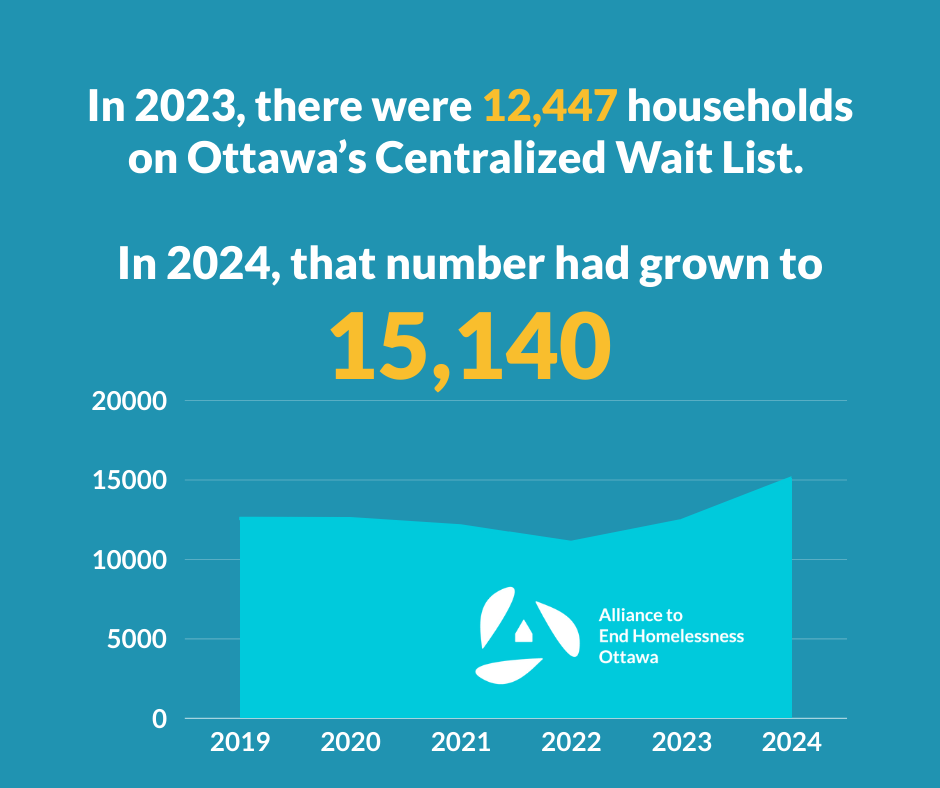
- In 2023, there were 12,447 households on Ottawa’s Centralized Wait List. In 2024, that number had grown to 15,140.
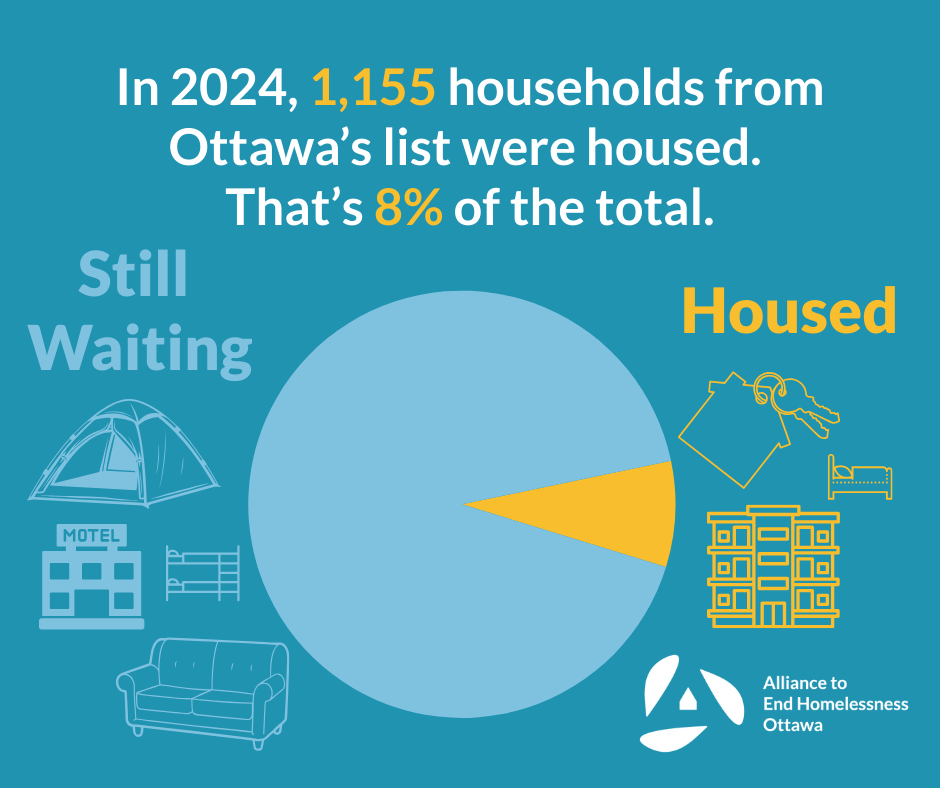
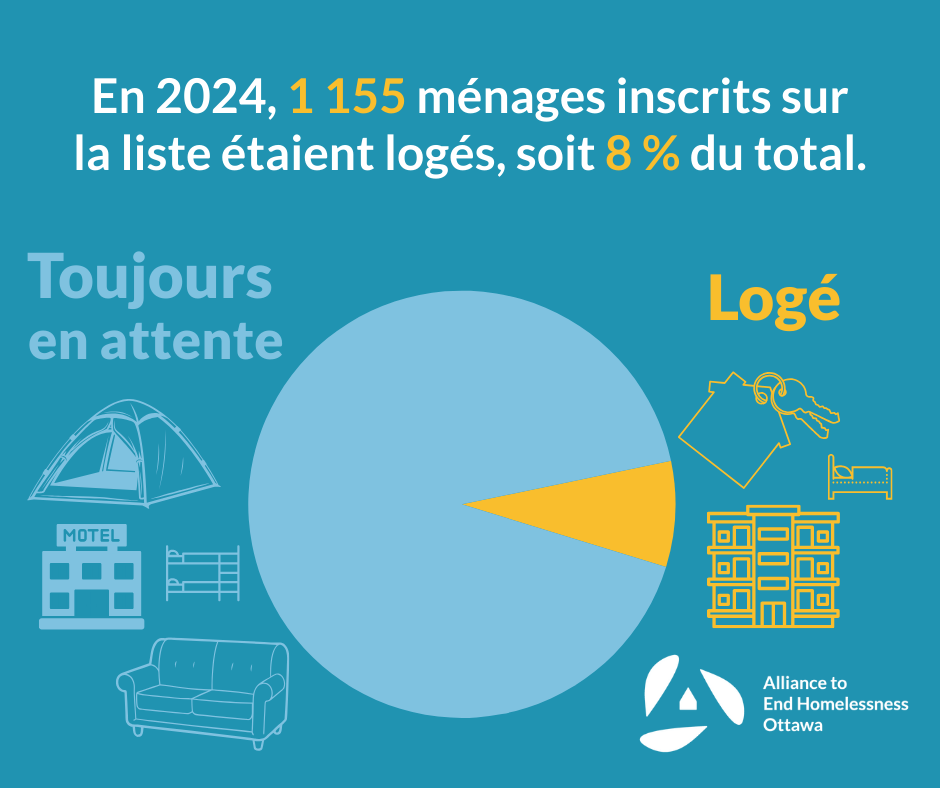
- In 2024, 1,155 households from Ottawa’s list were housed: 8% of the total.
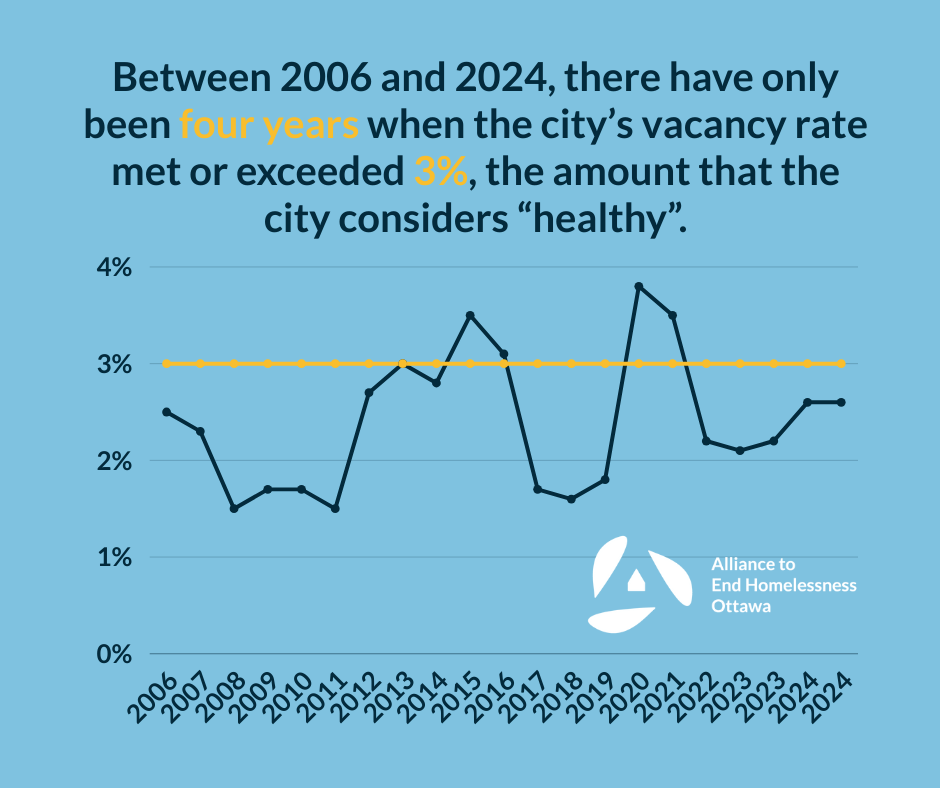
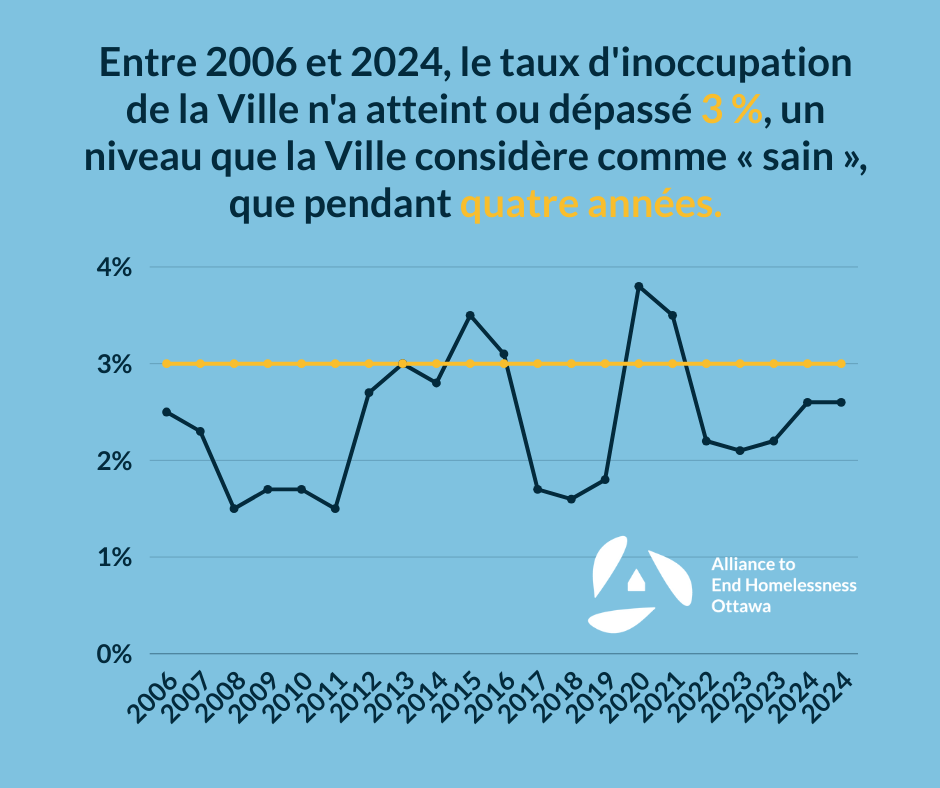
- Between 2006 and 2024, there have only been four years when the city’s vacancy rate met or exceeded 3%, the amount that the city considers “healthy”.
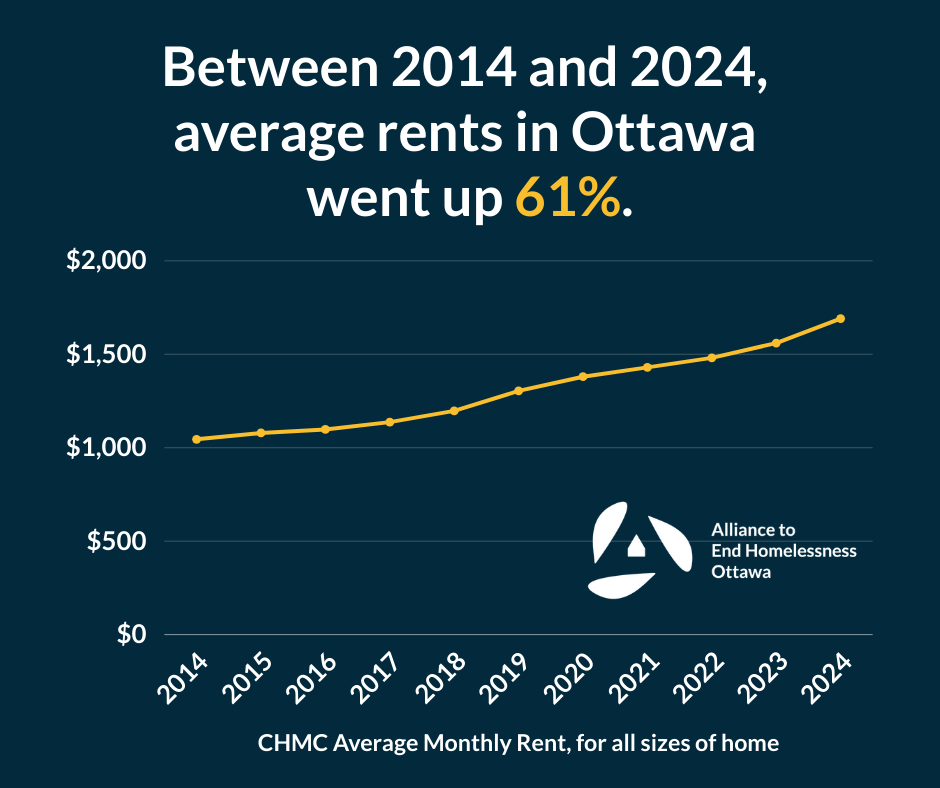
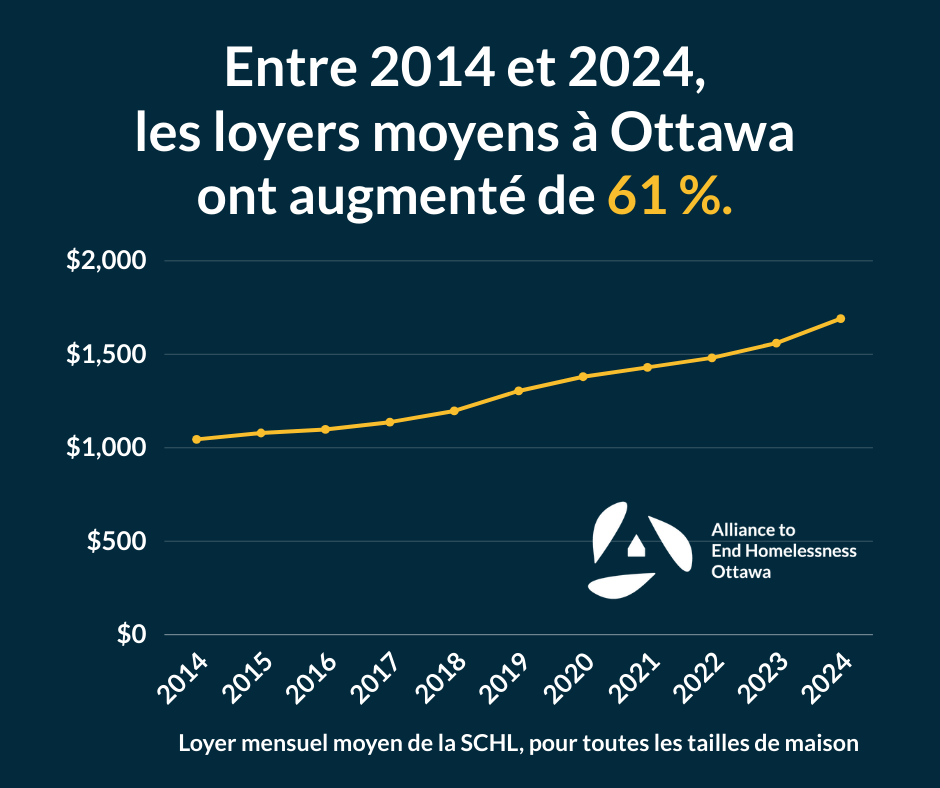
- Between 2014 and 2024, median monthly rent increased by 61.3% from $992 to $1,600.
- Between 2006 and 2021, the proportion of renter households paying $2,000 or more per month grew from 1.3% to 17.1%.
- Ottawa is projected to require 128,938 new housing units by 2035. The report projects a need for 3,150 units of affordable community housing, 350 supportive housing units, 200 transitional housing spaces, and 7,000 housing-allowance subsidies.
- Between 2018 and 2024, the proportion of people experiencing chronic homelessness declined from 58.1% to 49.3% in 2024, but the absolute number rose from 813 to 1,279 people.
- Although Indigenous people account for just 2.6% of Ottawa’s total population [based on Census data which is known to undercount urban Indigenous populations], they represented 19% of individuals experiencing homelessness in the City’s 2024 Point-in-Time Count.
The report models two scenarios through to 2035:
In the Business-as-usual scenario, Ottawa “maintains current program capacity and investment levels.” In this scenario, the City continues to build housing at its planned levels. If the city follows this path, the report estimates that “the number of people at risk of experiencing homelessness is projected to increase by 22.1 per cent over the next decade. This projected increase is driven primarily by ongoing population growth and worsening socioeconomic conditions, including increased affordability pressures and economic instability.” With the number of affordable homes being outpaced by population growth, more and more “people remain in shelters, transitional housing, or temporary accommodations for extended periods.”
The report also outlines a Reduction scenario, projecting “the effects of increased targeted investments and enhanced capacity, resulting in significant projected reductions in homelessness.” The components of this scenario include:
- “Significant increases in deeply affordable and supportive housing”
- “Stronger reliance on rent supplements and housing allowances”
- “A higher proportion of new supportive housing designated for those with the most complex needs”
- “Targeted emergency shelter reductions as crisis response needs decline”
Even in the reduction scenario, the number of people at risk of homelessness in Ottawa is still projected to increase by 20% by 2035, compared to 22% under the business-as-usual scenario. The report projects this modest reduction because, while factors like new units and subsidies are within the City’s control, “socioeconomic conditions — such as affordability pressures and economic instability — continue to keep the size of the at-risk population relatively large.”
The report’s Executive Summary concludes: “By prioritizing actions informed by data, lived experience, and clear community needs, Ottawa can create lasting stability, alleviate the human cost of homelessness, and improve the health, safety, and well-being of all residents.”
Links:
- Housing Needs Assessment report
- Housing Needs Assessment dataset
- CBC News: City warns of surge in homeless population by 2035
Infographics to download and share: